In Korean skincare, the toner step does something fundamentally different from what Western toners were historically designed to do. A Korean toner is not an astringent — it does not strip oil or tighten pores. Instead, it is the first serious hydration step after cleansing, designed to restore the skin’s moisture balance immediately, prep the skin for the next products in the routine, and deliver lightweight active ingredients that would be too concentrated to apply directly. This approach has reshaped how skincare enthusiasts globally think about the toner step.
The variety of formulas available reflects how seriously K-beauty brands have developed this category.
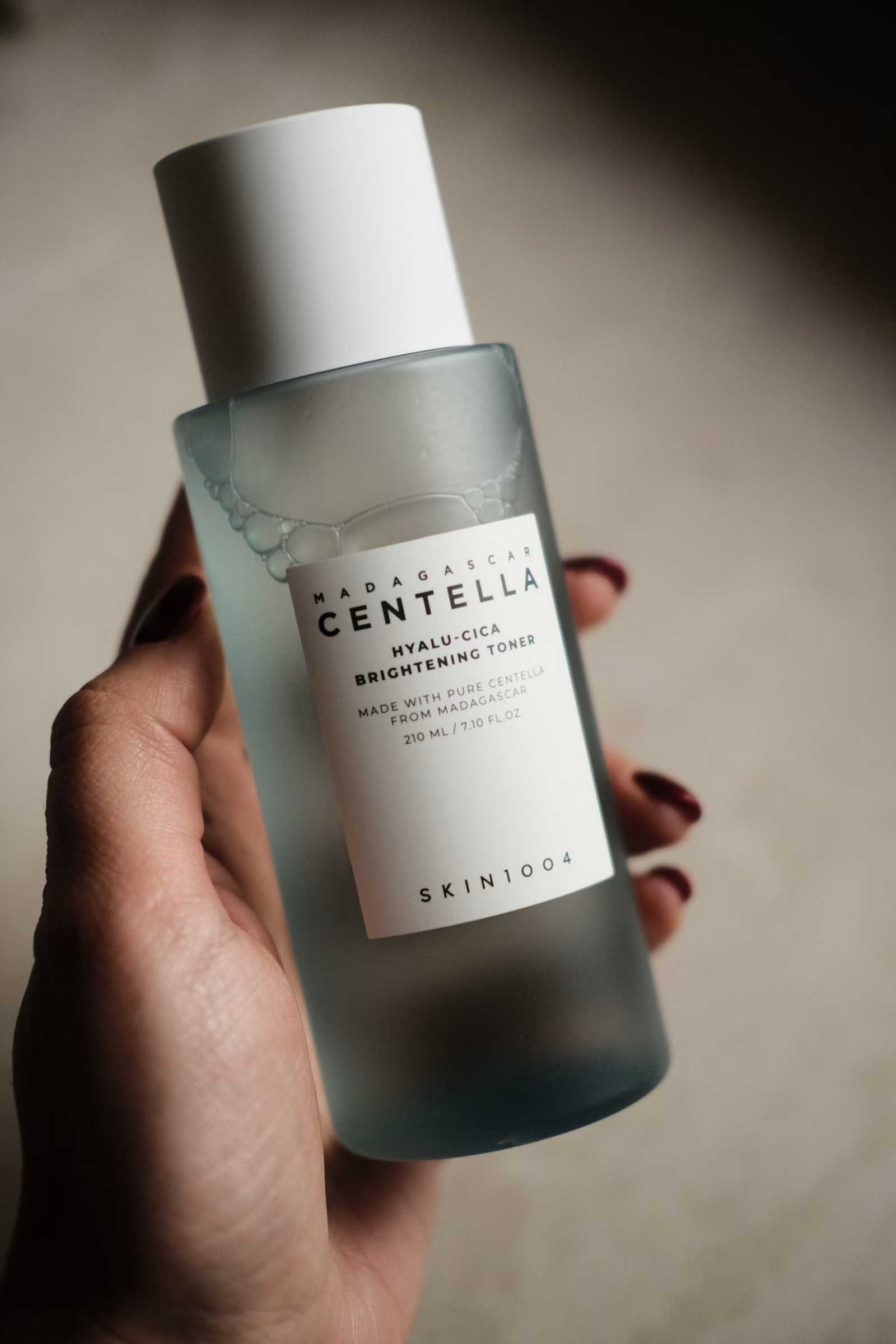
What You’ll Find in This Korean Toner Guide
- Why Korean Toner Is Different
- Best for Normal to Dry Skin
- Best for Oily and Acne-Prone Skin
- Best for Sensitive and Reactive Skin
- Best for Brightening
- Best for Anti-Aging
- Best Budget Pick
- How to Apply Correctly
- Frequently Asked Questions
Why Korean Toner Is Different
The defining feature of a Korean toner is texture and intention. Where traditional Western toners were alcohol-based and used to remove residue after cleansing, these products are water-based, often slightly viscous, and designed to be the first layer of moisture in a multi-step routine. Many contain fermented extracts, niacinamide, hyaluronic acid, or centella asiatica at concentrations that make them genuinely functional rather than just preparatory.
The result is a step that visibly changes skin — not by stripping it down, but by building it up with each application.
1. Best for Normal to Dry Skin
Formulas targeting normal to dry skin use layered humectants — multiple molecular weights of hyaluronic acid, glycerin, beta-glucan — to draw moisture into the skin from multiple depths simultaneously. The best options in this category absorb within 30 to 60 seconds and leave no tackiness, allowing the next steps to layer cleanly over the top.
Rice extract and snail secretion filtrate are common ingredients in these formulas, both chosen for their ability to hydrate while also supporting the skin barrier over time.
2. Best for Oily and Acne-Prone Skin
A Korean toner for oily skin focuses on balancing sebum production rather than removing it. Niacinamide at 2 to 5 percent, witch hazel, and low-concentration salicylic acid are the active ingredients most consistently found in this category. These formulas tend to have a thinner, more watery texture that absorbs immediately without adding any weight or occlusion to pores.
The goal is not to dry out the skin — which triggers more oil production — but to regulate it from within. Alcohol-free formulations are preferred, since alcohol-based options cause a rebound sebum response that makes oiliness worse over time.
3. Best for Sensitive and Reactive Skin
Centella asiatica, beta-glucan, and panthenol are the core ingredients in the best options for sensitive skin. These compounds calm inflammation, repair the skin barrier, and reduce redness without introducing any potential irritants. The best products in this category are also fragrance-free, essential-oil-free, and tested at low pH to minimize the chance of reaction.
This type of formula is often recommended after procedures — laser, chemical peels, microneedling — because it supports healing without adding any active stress to a disrupted barrier.
4. Best for Brightening
Niacinamide and vitamin C derivatives are the two brightening actives most reliably found in a Korean toner targeting hyperpigmentation, dullness, or uneven skin tone. Niacinamide works by interrupting melanin transfer from melanocytes to skin cells; vitamin C derivatives neutralize free radicals that accelerate pigmentation. Both require consistent daily use over 8 to 12 weeks to produce visible lightening.
Tranexamic acid is a newer brightening ingredient appearing in premium options, showing strong results for stubborn post-inflammatory hyperpigmentation.
5. Best for Anti-Aging
Peptide-forward formulas and fermented ingredient complexes define the anti-aging category. Peptides signal fibroblasts to produce more collagen; fermentation increases the bioavailability of active ingredients by breaking them into smaller molecules that penetrate the skin more effectively. Products with adenosine — a well-studied anti-wrinkle active approved in Korean cosmetics — appear consistently across this segment.
Unlike peptide creams, a water-based product applies the actives earlier in the routine when the skin is most receptive, allowing the subsequent moisturizer to lock them in.
6. Best Budget Pick
Accessible options from brands widely available outside Korea offer many of the same actives — niacinamide, hyaluronic acid, centella asiatica, snail filtrate — at a fraction of the price of premium lines. Several of the most consistently recommended formulas globally cost under $15 USD and have ingredient lists that rival products at five times the price.
Price and performance do not reliably correlate in this category. The best approach is to match the formula to your skin concern, start with a budget option, and upgrade only if the cheaper version clearly fails to deliver.
How to Apply Correctly
Apply the product immediately after cleansing, while the skin is still slightly damp. This maximizes absorption because damp skin allows water-based products to spread and penetrate more effectively than dry skin does.
Pour a small amount into your palms and press it gently into the skin rather than wiping it across the face. This patting motion delivers the product into the skin without physically disrupting the barrier. Some routines use multiple thin layers — a technique called the 7-skin method — for intensive hydration; for most people, one to two layers is sufficient.
Frequently Asked Questions
How is a Korean toner different from essence? The two overlap significantly in function and texture, but a Korean toner is typically applied first and has a thinner consistency. Essence tends to be slightly more concentrated and is applied after the toner as a second hydration and treatment step. Some routines use only one; most K-beauty routines include both.
Should I use a Korean toner morning and evening? Most formulas are designed for twice-daily use. In the morning it prepares the skin for sunscreen; in the evening it begins the repair and hydration cycle after cleansing. Some exfoliating formulas with AHA or BHA should be limited to evenings or every other day.
Do I need a Korean toner if I already use a serum? Using both gives better results than either alone. The toner creates a hydrated, pH-balanced base that allows the actives in a serum to absorb more effectively. Skipping it means applying serum to a potentially dehydrated or compromised surface, reducing how much of the active ingredient the skin can actually use.
Final Thoughts
The right Korean toner changes the texture and look of skin over time in ways that single-product routines rarely achieve — because it does not work alone; it works as a foundation that makes everything applied after it more effective. Match the formula to your primary concern, apply it consistently, and give it at least six weeks before evaluating.
The step that most people skip first is often the one that delivers the most consistent long-term improvement.