Daegu is South Korea’s third-largest metropolitan city by population and one of the most underrated destinations in the country for international visitors. It has a dense, walkable old town district with one of Korea’s most atmospheric traditional markets, a genuine fashion and textile industry that earned it the nickname “the Milan of Korea,” world-class Korean medical tourism facilities, and easier access to surrounding natural scenery than almost any other major Korean city. This Daegu travel guide focuses on the six things that will shape a first visit most significantly.
Getting here is straightforward — Daegu sits on the main KTX line between Seoul and Busan, making it one of the most accessible stops on the country’s fastest rail corridor.
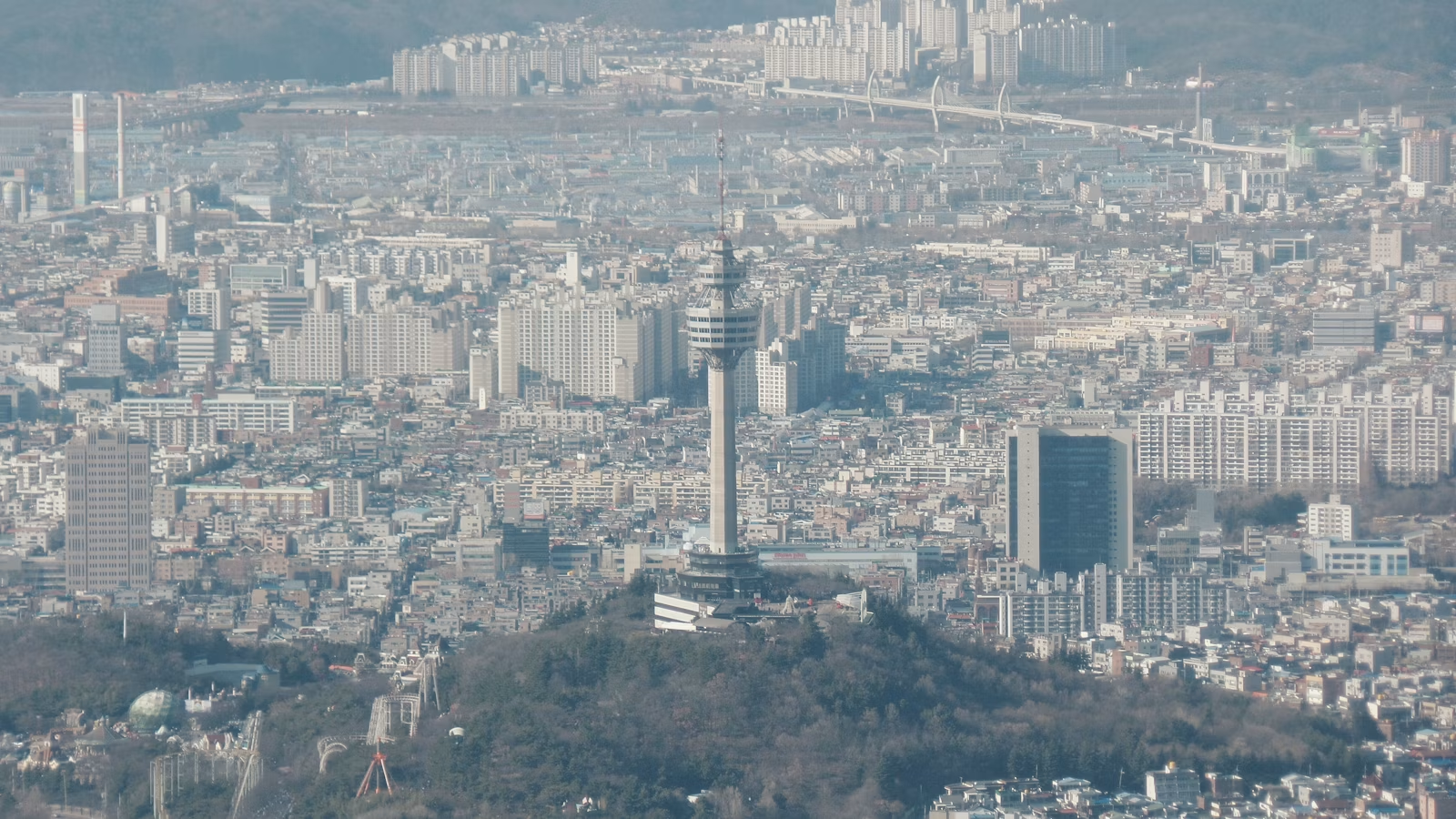
What You’ll Find in This Daegu Travel Guide
- How to Get to Daegu
- Seomun Market and the Old Town District
- Dongseongno: Shopping and Street Culture
- Day Trips from Daegu
- What to Eat in Daegu
- Best Time to Visit
- Where to Stay
- Frequently Asked Questions
1. How to Get to Daegu
KTX from Seoul Station reaches Dongdaegu Station in approximately 1 hour 40 minutes, making Daegu one of the most time-efficient overnight destinations from Seoul. From Busan, the KTX takes only 30 minutes. Regular trains (ITX-Saemaul and Mugunghwa) and buses also serve Daegu from most major Korean cities. Within the city, two metro lines, buses, and taxis cover all main tourist areas effectively.
The core area of any Daegu travel guide — Seomun Market, Dongseongno, and Chinatown — is compact enough that walking between them is practical.
2. Seomun Market and the Old Town District
Seomun Market is Daegu’s oldest and most famous market, operating since the Joseon dynasty and now one of the largest traditional markets in Korea, with over 4,000 stores spread across multiple buildings and outdoor sections. It is the central stop of this Daegu travel guide because it shows the city’s commercial DNA in the most concentrated form.
The market specializes in textiles, fashion fabrics, and clothing — a reflection of Daegu’s historic role as Korea’s textile production hub. Alongside the fabric shops you’ll find food stalls, dried goods vendors, kitchen supply shops, and a night market section that comes alive after sundown with prepared street foods.
The surrounding old town streets include Korea’s only preserved Qing-dynasty Chinese consulate building, a short section of traditional Korean-Chinese historical architecture, and several 20th-century Japanese colonial-era bank buildings converted to cafes and cultural spaces.
3. Dongseongno: Shopping and Street Culture
Dongseongno is Daegu’s main pedestrian commercial boulevard, a strip of fashion boutiques, department stores, international brand shops, street food vendors, and performance spaces that runs through the central district. Any Daegu travel guide covering the city’s fashion reputation needs to include this area — it is busiest on weekends when street performers set up along the main drag and the surrounding alleys fill with independently-run clothing brands targeting the young adult market.
The alleys branching off the main boulevard contain Daegu’s most interesting independent cafes, vintage clothing stores, and artist-run spaces, which have developed alongside the mainstream commercial energy of the main street.
4. Day Trips from Daegu
Daegu’s location in the Gyeongsang basin makes it an exceptional base for day trips, which is a feature few Daegu travel guide articles emphasize enough. Haeinsa Temple, one of Korea’s three jewel Buddhist temples and the home of the Tripitaka Koreana woodblock collection, is 80 kilometers west and reachable by bus in about an hour. Gyeongju, Korea’s open-air museum city and former capital of the Silla Kingdom, is 60 kilometers east and about 50 minutes by KTX or bus.
Palgongsan Mountain directly north of the city has cable cars, granite Buddhist carvings, and autumn foliage that makes the hillside especially beautiful from October through November. The mountain is one of the most visited natural spaces near any major Korean city and a consistent highlight in this Daegu travel guide.
5. What to Eat in Daegu
Daegu is known as one of Korea’s spiciest regional food cities, and the local food scene reflects that. Daegu makchang (grilled intestines) is the city’s signature late-night eating experience — small charcoal grill restaurants, concentrated in the Pyeonghwa Market area, serve makchang with garlic, sesame oil dipping sauce, and soju. It is an experience central to any honest Daegu travel guide.
Japchae-tteok (stir-fried glass noodles with tteok rice cakes), spicy tteokbokki variations with added ingredients unique to local Daegu versions, and nurungji (scorched rice crust) served as a porridge are other foods worth seeking out.
Daegu and the surrounding Gyeongbuk region are also the most important apple-growing area in Korea — the apples from this region, known for their sweetness and crispness, are some of the best in the country and available at markets from September through November.
6. Best Time to Visit
Autumn is the season most recommended in this Daegu travel guide because the Palgongsan foliage peaks in October to November, the apple harvest is in full swing, the night market at Seomun is lively and the weather is comfortable. Spring is also pleasant, with Cherry Blossom Road (Gasan area) and the Dalseong Park botanical displays attracting visitors.
Daegu is famous within Korea for being exceptionally hot in summer — it is a basin city surrounded by mountains that trap heat, which is worth noting if you are sensitive to high temperatures. Winter is cold but dry and the city is manageable for indoor market and food exploration.
Where to Stay
Most Daegu visitors base themselves near Dongdaegu Station for transport convenience or in the Banwoldang/Dongseongno area to be walking distance from the main attractions. A wide range of business hotels, boutique hotels, and guesthouses serves both areas. The Daegu travel guide recommendation for first-time visitors is the Banwoldang area for its central location and walkability to Seomun Market, Dongseongno, and the old Chinatown streets.
Frequently Asked Questions
Is Daegu worth visiting on the Seoul–Busan KTX route? Yes — the train stop adds only a minimal time cost and gives access to a major Korean city with a distinct local character. Most Daegu travel guide visitors find a single overnight stay changes their understanding of regional Korea significantly.
Do I need to rent a car in Daegu? No, for central Daegu the metro and walking are sufficient. For Haeinsa Temple and Palgongsan, buses run regularly. A taxi for Palgongsan cable car access is inexpensive.
What language do people speak in Daegu? Korean, with a distinctive Gyeongsang Province dialect that sounds different from Seoul Korean. English is spoken in major hotels and tourist facilities but less prevalent in markets and local restaurants than in Seoul.
How long should I plan to stay? Two nights is the minimum this Daegu travel guide recommends — one full day for the city center and markets, one day for a day trip to Palgongsan or Haeinsa, with evenings for the Seomun night market and makchang.
Final Thoughts
This Daegu travel guide makes the case that Daegu deserves a real stop rather than a through-train glance. The market, the food, the day-trip access, and the genuine local character of the commercial streets are all significantly above what most international itineraries credit.
Add a night here and you will see a part of Korea that the standard tourist circuit misses entirely.