Andong is the city most closely associated with traditional Korean culture — it is home to Hahoe Folk Village, one of Korea’s two UNESCO World Heritage villages, and to the Dosan Seowon Confucian academy, which has shaped Korean scholarly tradition for over four centuries. This Andong travel guide focuses on the six things that make visiting this city rewarding: how to get here, what the major cultural sites offer, where to eat, when to visit for the mask dance festival, and how to organize a trip that actually does justice to one of the most historically significant destinations in Korea. Unlike most Korean travel destinations where the appeal is visual spectacle, this Andong travel guide destination rewards visitors who slow down and engage with what the place actually represents.
Andong is located in North Gyeongsang Province, about 180 kilometers southeast of Seoul.
What You’ll Find in This Andong Travel Guide
- How to Get to Andong
- Hahoe Folk Village
- Dosan Seowon Confucian Academy
- What to Eat in Andong
- Best Time to Visit
- Day Trips from Andong
- Frequently Asked Questions
1. How to Get to Andong
KTX and ITX express trains connect Seoul to Andong in approximately 2 hours, making this Andong travel guide destination accessible as an overnight trip or a longer stay. The ITX-Saemaeul service from Seoul Cheongnyangni Station is the most direct option; the KTX route via Daegu is slightly longer but more frequent. The train arrives at Andong Station, which is within walking distance of the city center and close to the starting point of most Andong travel guide itineraries.
Express buses from Seoul’s Gangnam Express Bus Terminal reach Andong in approximately 2.5 to 3 hours and are a practical alternative — the terminal is well connected to major subway lines and the bus journey passes through scenic Gyeongsang Province countryside. Driving from Seoul takes about 2.5 hours via the Jungbu Naeryuk Expressway. A car is useful for reaching some of the outer sites in this Andong travel guide, particularly Dosan Seowon, which is about 25 kilometers north of the city center.
2. Hahoe Folk Village
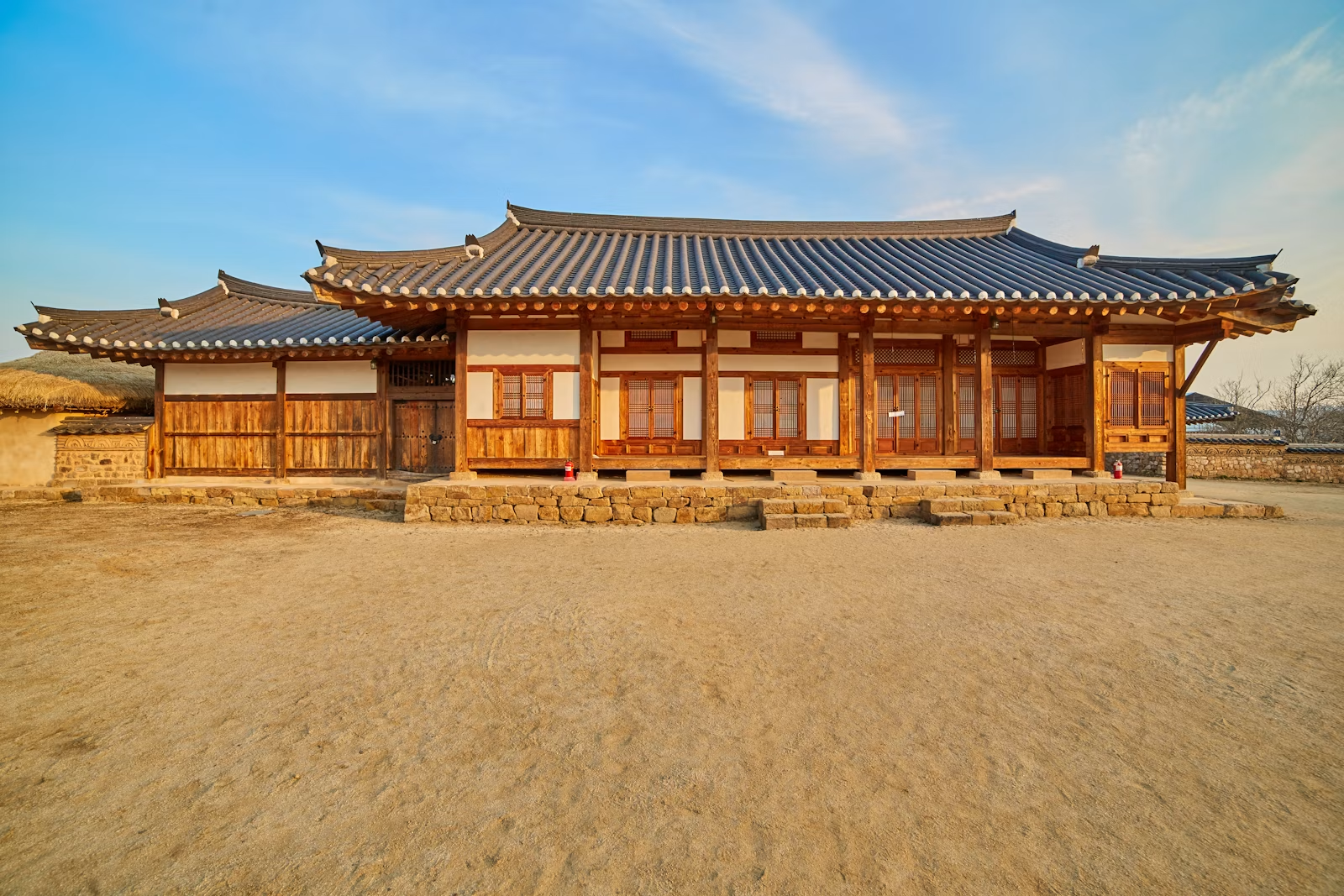
Hahoe Folk Village is the centerpiece of any Andong travel guide — a living village of traditional Korean homes built during the Joseon Dynasty that has been continuously inhabited since the 14th century. The village sits on a peninsula formed by a dramatic bend in the Nakdong River, surrounded by low mountains, and was designated a UNESCO World Heritage Site in 2010 alongside Gyeongju’s Yangdong Village.
Unlike museum recreations, Hahoe is still home to real residents who live in the traditional thatched-roof and tile-roof houses. Walking through the village means walking through streets that have remained essentially unchanged for six centuries — the Ryu clan, one of Korea’s most prominent Joseon-era families, has lived here for generations. The Byeongsan Seowon Confucian academy, located about 4 kilometers from the village along a forest trail, complements the village visit with a quieter, more isolated Joseon-era structure that sees far fewer visitors than the main village. From the cliff across the river (accessible by ferry from the village), a panoramic view of the entire village bend is one of the most photographed scenes in this Andong travel guide destination.
3. Dosan Seowon Confucian Academy
Dosan Seowon was established by Yi Hwang — one of the most revered Confucian scholars in Korean history, whose image appears on the 1,000 won banknote — in 1574. Any serious Andong travel guide treats this site as essential: the academy represents the intellectual tradition that defined Joseon Dynasty education and politics for three centuries, and the grounds have been carefully preserved with lecture halls, a library, and a tea garden overlooking the Nakdong River.
The site is quieter than Hahoe, attracts fewer tourists, and requires deliberate effort to reach — which makes it a more reflective experience. The surrounding landscape along the Nakdong River adds to the atmosphere; Yi Hwang himself praised this setting as ideal for scholarly contemplation. The academy holds traditional Confucian rites twice a year that are open to visitors.
4. What to Eat in Andong
The food dimension of this Andong travel guide is built around two dishes that the city claims as its own. Andong jjimdak — braised chicken cooked with glass noodles, potatoes, carrots, and dried chilies in a soy sauce-based sauce — originated here and became one of Korea’s most widely replicated dishes. The original version is served in the Andong Jjimdak Alley (찜닭골목) near the old market, where a row of restaurants have been cooking it since the dish became popular in the 1980s. The portions are large and meant to be shared.
Heotjesabap is the second dish any thorough Andong travel guide must mention — a rice dish with various vegetable toppings served in the style of ancestral rite food, developed in Andong’s Confucian household tradition. Andong soju, distilled at a higher alcohol content than commercial Korean soju (typically 45%), is the city’s most famous beverage and has been produced here since the Goryeo Dynasty. It is sold at the Andong Soju Museum near Hahoe Village.
5. Best Time to Visit
Autumn (late September to November) is the optimal season in any Andong travel guide — the foliage around Hahoe Village and along the Nakdong River creates some of the most photogenic scenery in Korea, and the Andong Mask Dance Festival takes place in late September or early October each year. The festival is one of Korea’s most distinctive cultural events: performances of traditional hahoe byeolsingut mask dances, which are listed as a UNESCO Intangible Cultural Heritage, draw visitors from across Korea and internationally.
Spring (April to May) offers comfortable temperatures, flowering seasons, and far fewer visitors than autumn. Summer is hot and humid but functional if timed around the festival calendar. Winter visits work well for the quieter atmosphere at Hahoe Village and Dosan Seowon — both sites feel more authentic with fewer crowds, and the bare-winter landscape emphasizes the architectural elements of each place.
6. Day Trips from Andong
Nearby destinations extend any Andong travel guide itinerary productively. Bongjeongsa Temple, about 20 kilometers northwest of Andong, contains the oldest surviving wooden building in Korea — the Geungnakjeon hall, dated to the Goryeo Dynasty (918–1392). It is one of the most historically significant structures in the country and easily reached by bus from Andong Station.
Yeongju, one hour north by bus, is home to Buseoksa Temple — another Goryeo-era site with sweeping views from its hilltop location — and to Sosu Seowon, Korea’s first Confucian academy, designated before Dosan Seowon. Both make Yeongju a logical extension of a cultural itinerary built around this Andong travel guide destination. Cheongnyangsan Provincial Park, between Andong and Yeongju, offers dramatic cliff-face walking and forested trails that contrast well with the cultural sites.
Frequently Asked Questions
How many days should I spend in this Andong travel guide destination? Two days is the standard — one day for Hahoe Folk Village and Byeongsan Seowon, one day for Dosan Seowon and the jjimdak alley. A third day allows for Bongjeongsa Temple or Cheongnyangsan. One day is possible but forces difficult choices between the major sites.
Is Andong easy to navigate without a car? Yes for the main sites. Local buses connect Andong Station to Hahoe Village (about 40 minutes) and run regularly. Dosan Seowon requires either a taxi or car — buses run infrequently. Taxis from the city center to Dosan Seowon cost approximately 15,000 to 20,000 won one way.
When is the Andong Mask Dance Festival? The festival typically takes place over one week in late September to early October. Exact dates shift slightly each year and can be confirmed on the Andong Mask Dance Festival official website. Booking accommodation well in advance is essential during festival week.
Final Thoughts
This Andong travel guide makes the case for treating the city as the most rewarding cultural destination in Korea. The combination of Hahoe Village, Dosan Seowon, and the mask dance festival creates an itinerary that goes deeper into Korean history than any other single-city trip can.
Take the train from Seoul, allow at least two full days, and leave having seen why Andong is called the spiritual capital of Korean traditional culture.