The first time I had samgyeopsal in Seoul, I didn’t know what I was doing. I sat down at a grill restaurant in Mapo with a group of Korean coworkers who immediately took over — slapping the meat on the grill, cutting it with scissors, wrapping pieces into parcels of lettuce and handing them to me before I’d even opened my menu. I just ate what was handed to me. It was one of the best meals of my trip.
Getting a good samgyeopsal recipe right at home is less complicated than it looks. But there are three things that will make or break it: the pork cut, the heat, and the wrapping setup. I’m going to go through all of them.
The Pork: What to Buy and How Thick to Cut It
A proper samgyeopsal recipe starts at the butcher counter, not the pan. Samgyeopsal is uncured, unmarinated pork belly — no sauce, no seasoning on the meat itself before grilling. What you’re buying should be the same cut as bacon before curing, ideally with visible layers of fat and lean flesh running in alternating bands.
Thickness matters enormously. The standard at Korean BBQ restaurants is 7–10mm per slice. If your slices are thinner than that, the fat doesn’t render properly before the outside chars, and you end up with tough, dry meat. If you can, buy a slab and slice it yourself. Most Korean or Asian grocery stores sell pre-sliced samgyeopsal at the right thickness — check the packaging for 삼겹살 if you’re shopping at a Korean market.
Amount to buy: about 200–250g per person for a full meal with side dishes. That’s the meat side of this samgyeopsal recipe sorted.
The Grill Setup
You don’t need a charcoal grill to make this samgyeopsal recipe work at home. A heavy cast iron pan or griddle gets hot enough to do the job. What you do need is high heat and ventilation — pork belly renders a significant amount of fat while cooking, and your kitchen will fill with smoke. Open windows, turn on the range hood, or take it outside if you have the option.
Cast iron works best because it holds temperature when the cold meat hits the surface. A regular non-stick pan will drop in temperature too much and braise the meat instead of searing it. You want to hear an aggressive sizzle the moment the pork goes down.
Preheat the pan on high for at least two minutes before the meat goes in. No oil — the pork belly will render enough fat within the first minute to prevent sticking.
The Table Setup: What Goes Around the Grill
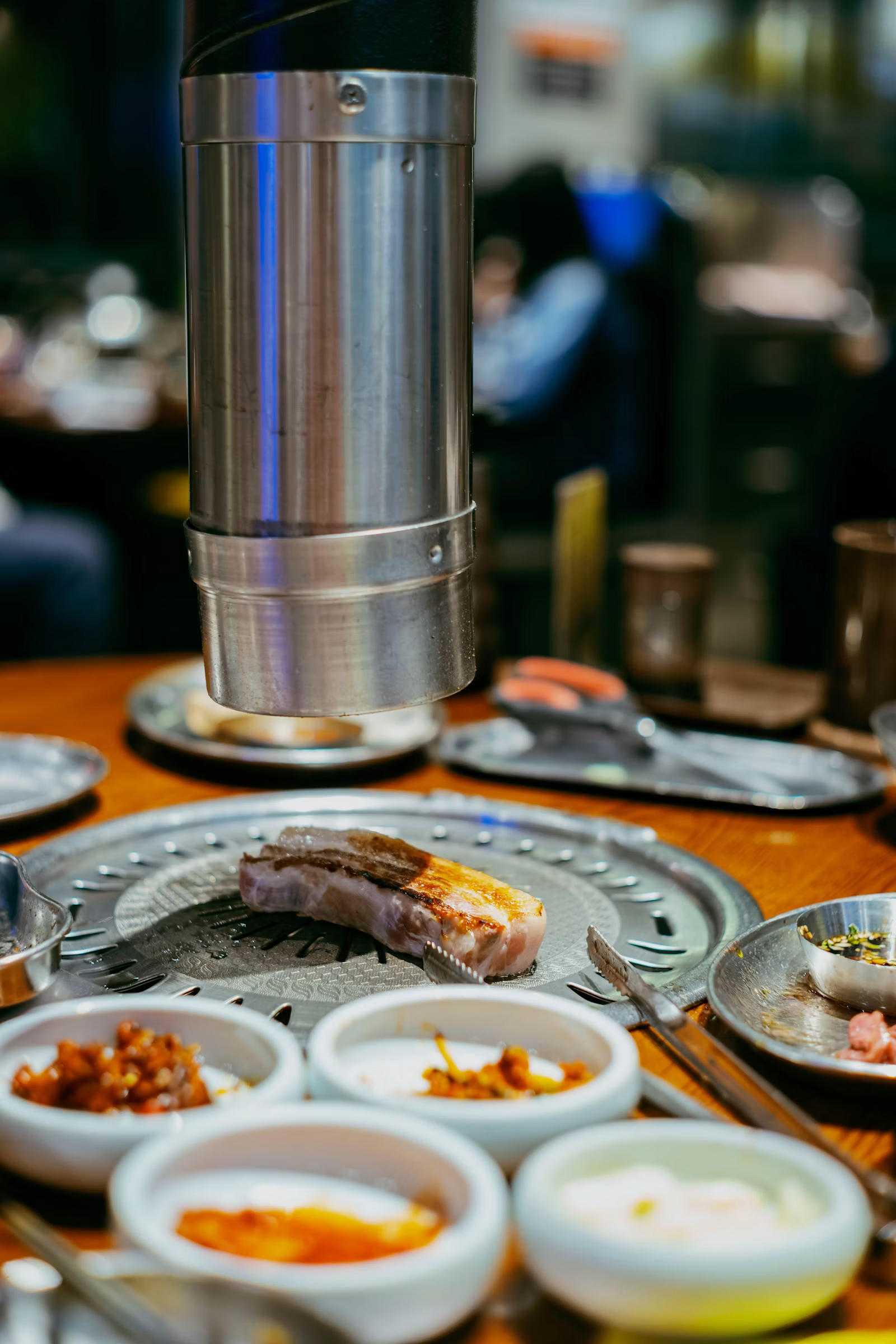
Here’s what most samgyeopsal recipe guides skip entirely: the setup around the grill matters as much as the meat. No samgyeopsal recipe is complete without the full table. You need all of this on the table before you start cooking.
Ssam vegetables — large lettuce leaves (butterhead or perilla leaves), which you’ll use to wrap the pork. Wash and dry them. Both work; perilla has a more assertive, slightly anise-like flavor that pairs differently with the pork than the neutral crunch of lettuce.
Ssamjang — the essential dipping sauce. This is a thick paste made from doenjang (fermented soybean paste), gochujang, sesame oil, garlic, and a bit of sugar. Buy it premade at a Korean grocery store rather than making it from scratch the first time — the store-bought version is very good and the difference at home is marginal.
Sesame oil with salt — a small dish of sesame oil with a pinch of coarse salt on the side. You dip the cooked pork in this before wrapping. It sounds simple, and it is, and it’s essential. Don’t skip it.
Sliced garlic and green onion — raw garlic cloves halved, green onion cut into 3cm pieces. These go inside the wrap. The garlic softens on the grill if you want to cook it first; I usually eat it raw because I find the sharpness cuts through the fat.
Kimchi — ideally well-aged, the sour kind. Either as a side dish or tucked inside the wrap.
Cooking the Pork
This samgyeopsal recipe moves fast once the heat is on.
Lay the slices flat on the hot pan. Don’t crowd them — cook in batches if needed. Within 90 seconds you’ll see the fat beginning to render and the edges going opaque. Flip once. Another 90 seconds on the second side. The pork is done when the fat layers have gone translucent and slightly caramelized at the edges, with a little char where the fat pools.
Use kitchen scissors to cut each slice into bite-sized pieces — about three or four cuts per slice. This is standard at Korean restaurants and not just for show. Bite-sized pieces are what make the wrap work. Trying to wrap a full long slice of pork belly in a lettuce leaf will end in structural failure.
Total cooking time per batch: 3–4 minutes. Don’t walk away.
How to Actually Wrap It
The samgyeopsal recipe climax is the ssam. Take a lettuce leaf in your palm, lay it flat. Place two or three pieces of pork in the center. Add a small smear of ssamjang — not too much, it’s salty — a slice of raw garlic, and a bit of green onion. Fold the leaf around everything into a parcel and eat it in one bite. This is important: one bite. A ssam that requires two bites is too big.
The order matters less than the combination. Pork + ssamjang + garlic in one mouthful is the baseline. Everything else (kimchi inside the wrap, a piece of grilled garlic, perilla instead of lettuce) is a variation.
What Home Cooking Gets You and What It Doesn’t
An honest note on this samgyeopsal recipe: restaurant samgyeopsal and home samgyeopsal are different experiences. The restaurant version benefits from a live charcoal or wood-burning grill that adds a smokiness a cast iron pan can’t replicate. The meat-to-table ritual, the ongoing cooking over a shared fire — that’s harder to recreate alone or with two people.
What home cooking gets you: the full flavor of good pork belly at a fraction of the cost, on your own schedule, with exactly the banchan you want on the table. I’ve made this samgyeopsal recipe for groups of six with a portable butane grill on a dining room table and it’s worked well. For two people, the cast iron method is fine and far easier.
Buy good pork, get the pan hot, have everything set up before you start, and cut the meat with scissors. That’s the whole recipe.