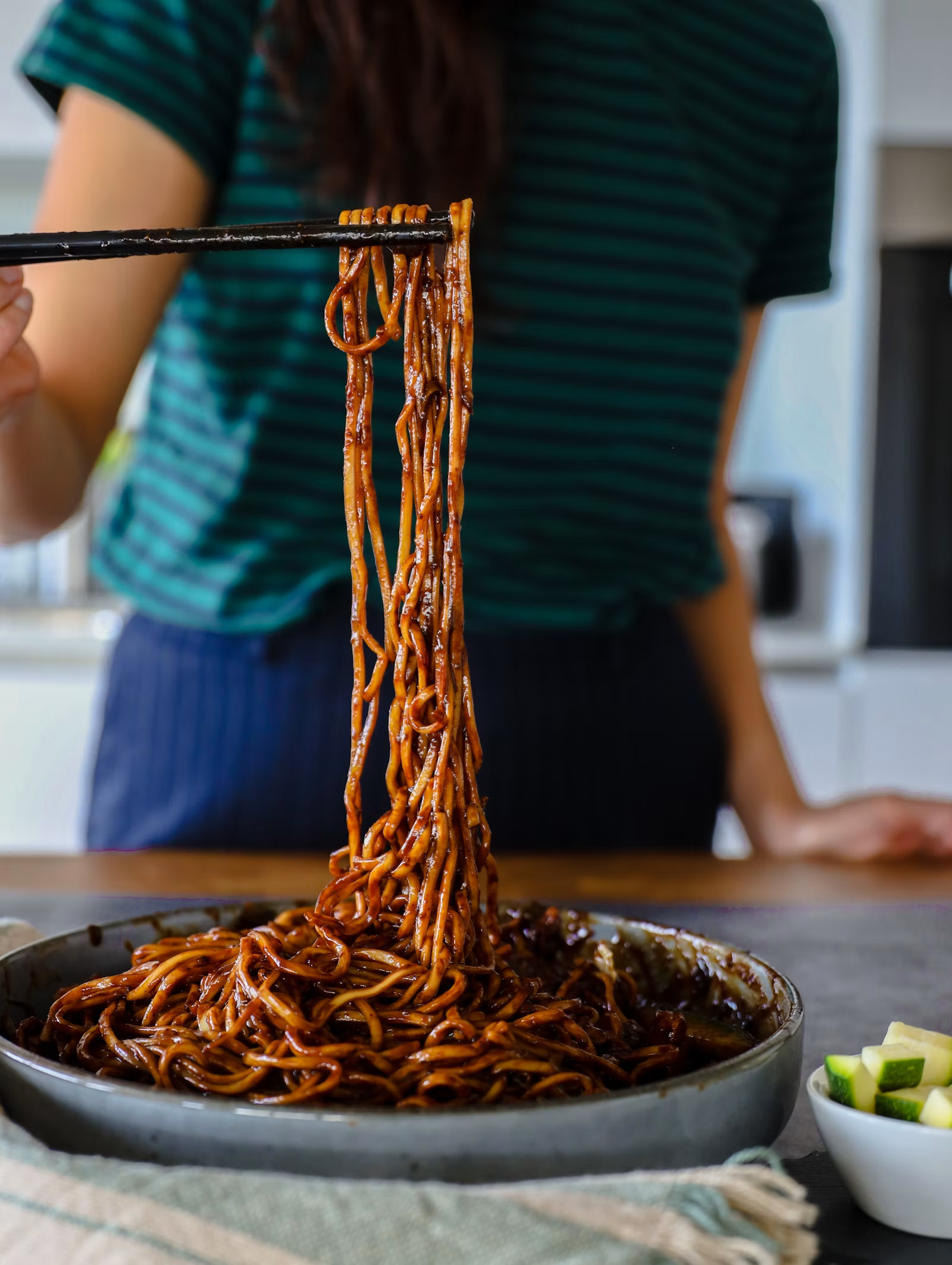
The jajangmyeon recipe most people outside Korea encounter is a pale version of the real thing — black bean sauce from a jar poured over whatever noodles were in the pantry. The actual dish is different. Dark, thick, slightly sweet, deeply savory, with chewy noodles that hold their texture through the whole bowl. It takes about 40 minutes to make correctly, and most of those minutes belong to the sauce.
April 14th is Black Day in Korea — the holiday when single people who didn’t get valentines or White Day gifts console themselves by eating black food. Jajangmyeon is the default, which is why the jajangmyeon recipe is ordered on delivery apps more on that one day than almost any other. I first heard about this while sitting in an old Korean-Chinese restaurant near Jongno — red vinyl booths, laminated menus, gruff service that suggests the food doesn’t need any personality assistance. They were right. My first proper bowl there made the three batches I’d attempted at home feel like rough sketches.
I’ve made this dozens of times since. The batch where I finally got the sauce right was the one where I accidentally doubled the onion quantity and was too lazy to fix it.
The One Thing You Must Get Right: Chunjang
No jajangmyeon recipe works without chunjang (춘장) — fermented Korean black bean paste. This is not Chinese black bean sauce or Japanese miso. Chunjang is sold at Korean grocery stores, usually in a brown or black tub, and has a deep, slightly bitter, fermented flavor that becomes the backbone of the entire dish once it’s been properly cooked.
The critical move: chunjang must be fried in oil before anything else goes into the pan. Three to four minutes over high heat, stirring constantly, transforms it from sharp and raw-tasting to something rounded and complex. Skip this step and the sauce will have a metallic edge you can’t fix later. Most home jajangmyeon recipe guides mention this in a single sentence and move on. It deserves more attention than that.
What You Need
The ingredient list for this jajangmyeon recipe is short — the proportions are what matter, especially the onion.
For 2 servings:
- 300g fresh jajangmyeon noodles (or thick fresh Chinese noodles; thick udon as a substitute)
- 150g pork belly or pork shoulder, cut into 1cm cubes
- 3 tablespoons chunjang
- 3 tablespoons vegetable oil
- 2 large onions, diced into 1cm pieces
- ½ zucchini, diced into 1cm pieces
- ½ cup water or light chicken broth
- 1 tablespoon sugar
- 1 tablespoon oyster sauce
- 1 tablespoon cornstarch + 2 tablespoons cold water (slurry)
- Sesame oil to finish
- 2 eggs + sliced cucumber to garnish
Secret 1: Twice the Onion
The jajangmyeon recipe detail no one advertises: Korean-Chinese restaurants use a ratio of onion that feels excessive. Close to equal weight of onion and pork. The onion cooks down almost completely into the sauce — you barely see it by the time it’s done — but it builds the sweetness and body that separates a restaurant sauce from a version that tastes slightly thin.
Two large onions for two servings. Don’t talk yourself out of it.
Secret 2: Fry the Chunjang Properly
Heat the oil in a wide pan or wok over high heat. Add the chunjang and stir constantly for 3–4 minutes. The paste will shift in smell — from sharp and fermented to rounder and deeper. That’s the signal to move on. Remove it from the pan and set aside.
In the same pan, cook the pork over high heat for about 3 minutes until it loses its raw color. Add the onion and zucchini and stir for 4–5 minutes until the onion softens and starts to turn slightly translucent. I cover the pan for the last 2 minutes to let the vegetables steam — they soften faster without scorching.
Add the fried chunjang back in, along with the sugar, oyster sauce, and water or broth. Stir to combine and simmer for 5 minutes. The sauce will look looser than the finished version. That’s fine.
Secret 3: The Noodles
For a proper jajangmyeon recipe, the noodle choice matters more than most home versions acknowledge. The dish is built for thick, chewy, slightly alkaline wheat noodles — the kind with some bounce even when fully cooked. Fresh jajangmyeon noodles from a Korean grocery are ideal. Thick fresh Chinese noodles or fresh udon work reasonably well. Dried pasta does not.
Cook the noodles in a large pot of boiling, unsalted water per packet instructions. Drain and give them a brief cold-water rinse to stop the cooking and prevent clumping. Don’t rinse aggressively — some surface starch helps the sauce stick.
Finishing the Sauce
Once the sauce has simmered for 5 minutes, add the cornstarch slurry and stir continuously until it thickens and coats the back of a spoon — about 1 minute. Finish with a few drops of sesame oil. That’s when a good jajangmyeon recipe smells right: dark, slightly sweet, the fermented depth from the chunjang now fully integrated into the pork and vegetable base.
Serve the noodles in bowls and ladle the sauce over the top. Don’t toss yet.
The Egg Situation
The egg is the traditional garnish in a jajangmyeon recipe, and how it’s served varies. Classic Korean-Chinese restaurants place a raw egg yolk in a small well made in the sauce — you break it yourself and mix it in. It adds richness without cooking into the sauce. A soft-fried egg (sunny-side up, yolk still runny) is the easier home version and works just as well.
Serve with thinly sliced cucumber on the side. The coolness and crunch cut through the rich sauce in a way that’s not optional — it changes how the whole bowl eats.
Mix everything at the table and eat immediately. Jajangmyeon does not improve with waiting.
Two Questions Worth Answering
Can I use jarred black bean sauce from a Chinese grocery? Technically yes, but a good jajangmyeon recipe is built around chunjang specifically. Chinese-style black bean sauce has a different flavor profile — less fermented, sometimes saltier — and the result tastes more like Chinese fried noodles than Korean jajangmyeon. If finding chunjang means an extra trip, it’s worth it.
Can I make this without pork? Yes. Replace the pork with diced mushrooms (shiitake are ideal) and extra zucchini, and use vegetable broth. The sauce loses some depth without pork fat, but this jajangmyeon recipe works as a vegetarian dish — add a bit more oyster sauce or a vegan equivalent to bring back some of the savory base. It’s a different bowl, but still a good one.