In the Korean skincare routine, the serum step carries the highest concentration of targeted actives in the entire lineup. A Korean serum is applied after essence and before moisturizer, positioned to deliver precise ingredients directly into the skin at the moment when absorption capacity is highest. Unlike a moisturizer — which focuses on sealing in hydration — or an essence — which delivers a lighter dose of actives across the whole face — a Korean serum is formulated around a specific skin concern and concentrated enough to produce measurable results from that single targeted function.
Choosing the right formula starts with identifying your primary concern: brightening, hydration, anti-aging, acne control, or barrier repair.
What You’ll Find in This Korean Serum Guide
- What Makes Korean Serum Different
- Best for Brightening
- Best for Deep Hydration
- Best for Anti-Aging
- Best for Sensitive and Reactive Skin
- Best for Oily and Acne-Prone Skin
- Best Budget Pick
- How to Apply Correctly
- Frequently Asked Questions
What Makes Korean Serum Different
The defining feature of a Korean serum is its active ingredient concentration at a texture calibrated for the mid-routine position. Western serums tend to be thicker and are often used as standalone treatments; a Korean serum is designed to layer cleanly under a moisturizer without balling up or preventing the next step from absorbing. The textures range from watery ampule formulas to lightweight gel-serums, all optimized for rapid absorption.
Fermentation is the processing method most closely associated with the best Korean serum formulas. Fermented ingredients have smaller molecular structures than their unfermented equivalents, which means they penetrate more deeply through the skin barrier and carry additional beneficial byproducts generated during the fermentation process. This explains why K-beauty serums consistently outperform equivalent-ingredient Western formulas: the delivery mechanism has been refined through decades of fermentation research.
1. Best for Brightening
Niacinamide and vitamin C derivatives are the actives that define the brightening segment of Korean serum. Niacinamide works by blocking the transfer of melanin from melanocytes to skin cells, gradually reducing the appearance of hyperpigmentation and uneven tone. Vitamin C derivatives — stabilized forms like ascorbyl glucoside or 3-O-ethyl ascorbic acid — neutralize free radicals that accelerate pigmentation while also stimulating collagen synthesis.
The serum position is ideal for brightening actives because these ingredients need maximum contact time with the skin before the routine is sealed. A brightening formula used twice daily for 8 to 12 weeks produces visible improvements in tone evenness that a single-step approach cannot replicate.
2. Best for Deep Hydration
Hydration-focused formulas target the skin’s water content using multiple mechanisms simultaneously: humectants draw moisture in, occlusives slow its evaporation, and skin-identical ingredients help rebuild the structures that hold water in place. The best Korean serum options in this category use multiple molecular weights of hyaluronic acid — low, medium, and high — to hydrate at different depths within the skin at the same time.
Beta-glucan appears frequently alongside hyaluronic acid in this category because it has a higher hydration index at comparable molecular weights and provides a secondary anti-inflammatory effect. Snail secretion filtrate, a signature ingredient in many K-beauty hydration formulas, delivers both intense moisture and compounds that support ongoing skin repair — an efficient combination for a step designed to do multiple things at once.
3. Best for Anti-Aging
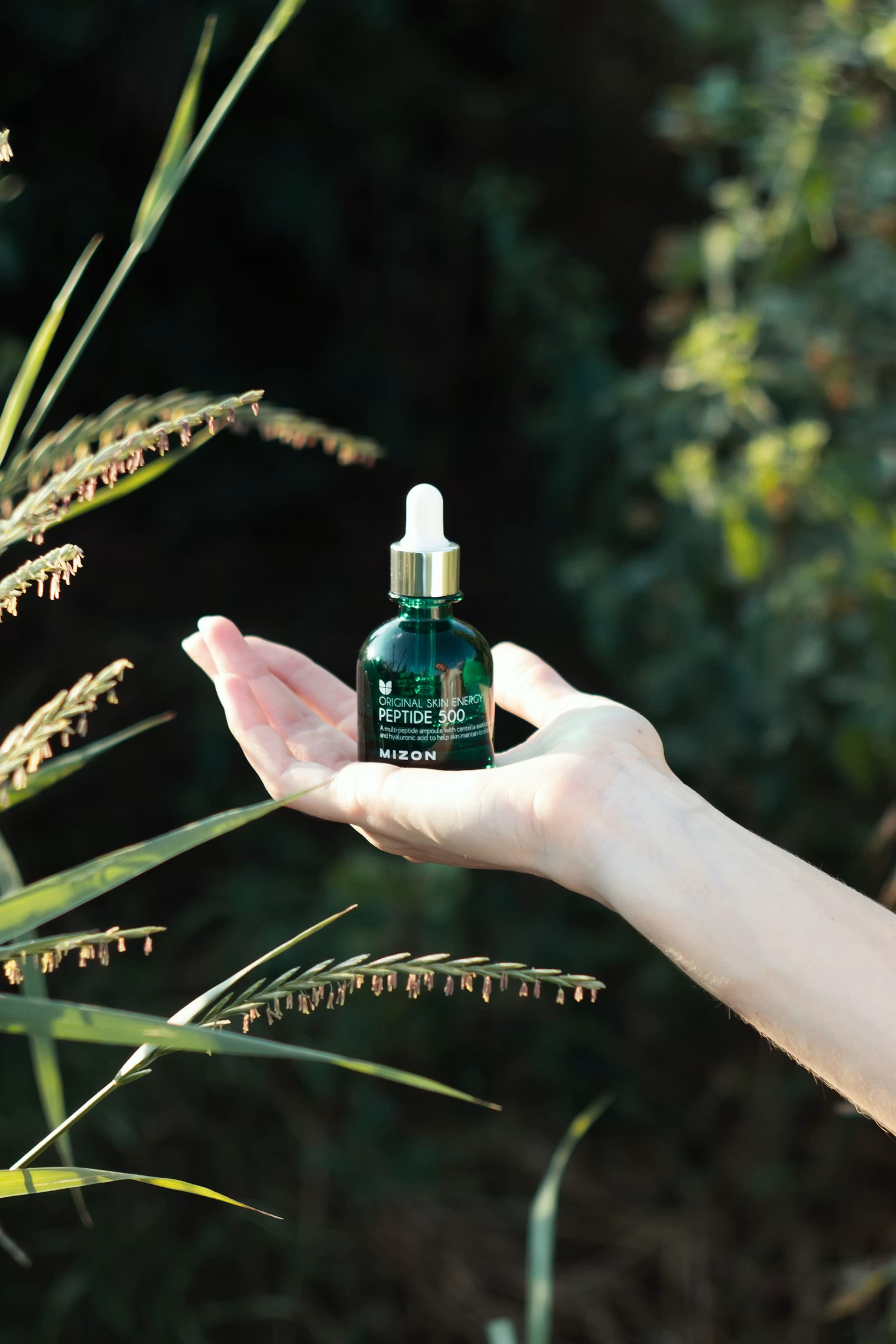
Peptide-forward formulas define the anti-aging segment of Korean serum. Peptides are short amino acid chains that signal skin cells to produce more collagen and elastin — the structural proteins responsible for firmness and elasticity. The best anti-aging formulas include multiple peptide types working on different aspects of the aging process: signal peptides that trigger collagen production, carrier peptides that deliver minerals to fibroblasts, and inhibitor peptides that relax micro-tension in the skin surface.
Adenosine — a well-studied anti-wrinkle active approved in Korean cosmetics — appears consistently in this category and has strong clinical evidence for reducing fine line depth with daily use. Retinol equivalents, including bakuchiol and stabilized retinal, are also found in Korean anti-aging serums and work synergistically with peptides when used in an evening routine.
4. Best for Sensitive and Reactive Skin
Centella asiatica extract is the ingredient most closely associated with the best Korean serum options for sensitive and reactive skin. It contains four key active compounds — asiaticoside, asiatic acid, madecassic acid, and madecassoside — that calm inflammation, reduce redness, and rebuild the skin barrier without introducing any irritation risk. The best formulas in this category are fragrance-free, essential-oil-free, and built around a minimal, purposeful ingredient list.
Beta-glucan and panthenol (provitamin B5) consistently appear alongside centella in this segment. Beta-glucan forms a protective film over the skin surface that slows transepidermal water loss; panthenol penetrates quickly and accelerates barrier repair from within. Together, these three ingredients form the foundation of most well-regarded sensitive-skin serum formulas in K-beauty.
5. Best for Oily and Acne-Prone Skin
A Korean serum for oily and acne-prone skin focuses on regulating sebum production, keeping pores clear, and addressing post-acne marks simultaneously. Niacinamide at 5 to 10 percent is the most reliable active for this skin type: it reduces sebum output at the cellular level, minimizes pore appearance, and helps fade the hyperpigmentation that acne lesions leave behind.
Salicylic acid at low concentrations (0.5 to 2 percent) provides additional pore-clearing action by dissolving the keratin plugs that cause blackheads and congestion. Serums in this category tend to have the thinnest, most watery textures — formulas that absorb instantly and leave no residue that could contribute to congestion or breakouts.
6. Best Budget Pick
Several widely available brands offer a Korean serum with active ingredient profiles that rival products at three to five times the price. Budget formulas from accessible K-beauty brands routinely include clinical concentrations of niacinamide, centella asiatica, hyaluronic acid, and peptide complexes. Starting with a budget option is practical because assessing compatibility between a specific formula and your skin takes several weeks, and lower cost during that evaluation period makes sense.
Price does not reliably predict efficacy in this category. Identify the active ingredient profile that matches your primary concern, then choose the most accessible formula that delivers it.
How to Apply Correctly
Apply after essence, while the skin is still slightly tacky from the previous step. Dispense 2 to 4 drops into the palm and press gently into the face using upward patting motions. Allow the Korean serum to absorb for 30 to 60 seconds before applying moisturizer on top.
In the morning, use it after essence and before sunscreen. In the evening, apply it after essence and before any facial oil or night cream. If using two serums simultaneously — a treatment formula and a hydrating formula — apply in order from thinnest to thickest texture, and allow each to absorb before the next.
Frequently Asked Questions
How is a Korean serum different from a Korean essence? A Korean serum is used after essence and carries a higher concentration of targeted actives in a slightly richer texture. An essence primes the skin and delivers a lighter dose of actives broadly across the face; the serum builds on that foundation with a precision formula aimed at a specific concern. Most complete K-beauty routines include both steps.
How long before I see results? For hydration and redness reduction, improvements are typically visible within 3 to 5 days of consistent use. For brightening, anti-aging, and acne control, allow 8 to 12 weeks of daily application before evaluating. Active ingredients compound over time — results require sustained use, not occasional application.
Can I use two serums at once? Yes — two serums is the standard maximum. Apply from thinnest to thickest texture, and check that the actives are compatible. High-concentration vitamin C and high-concentration niacinamide are best separated into morning and evening rather than used in the same step.
Final Thoughts
The right Korean serum is the step that addresses your most specific skin concern with the highest-concentration actives in the entire routine. Match the formula to your primary issue, apply it consistently after essence, and give it 8 to 12 weeks before drawing conclusions.
Results compound. The skin you want is built through daily habits, not a single exceptional product.