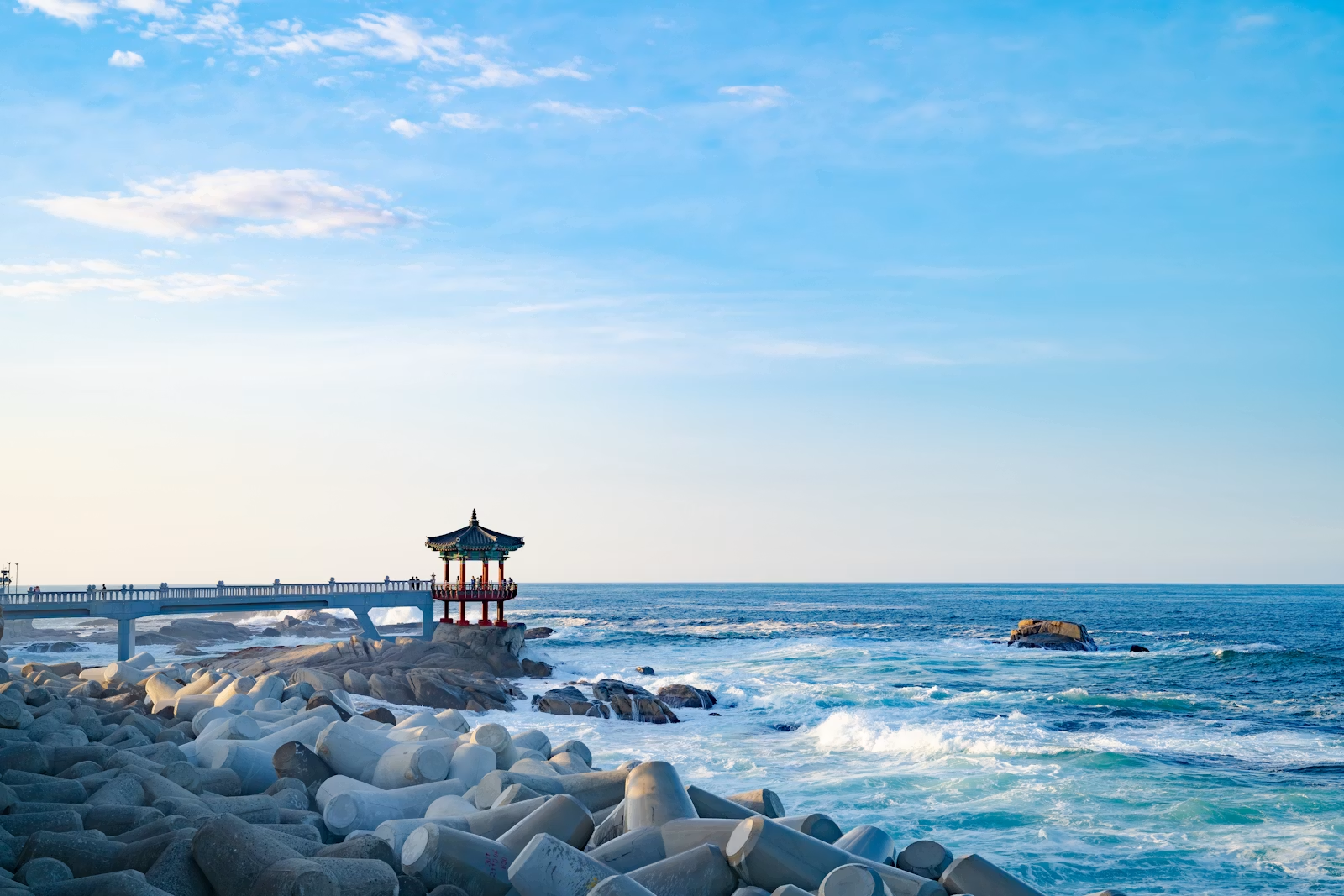
Gangneung is South Korea’s most celebrated East Sea coastal city — a compact, walkable destination where some of Korea’s most famous beaches meet a coffee culture that is entirely its own, a centuries-old bamboo grove tied to national history, a Confucian academy that shaped the Joseon dynasty, and a food identity built around fresh seafood and the tofu that made the city famous. This Gangneung travel guide focuses on six essentials that shape any first visit: how to get here efficiently, where to spend your time, what to eat, and what makes the city worth a full day or two rather than a quick stop.
The KTX high-speed rail line reaches Gangneung directly from Seoul, making it one of Korea’s most accessible weekend destinations.
What You’ll Find in This Gangneung Travel Guide
- How to Get to Gangneung
- Gyeongpo Beach and the Lakeside Area
- Ojukheon and the Historic Sites
- The Gangneung Coffee Street
- What to Eat in Gangneung
- Best Time to Visit
- Day Trips from Gangneung
- Frequently Asked Questions
1. How to Get to Gangneung
The KTX Gyeonggang line from Seoul Cheongnyangni Station reaches Gangneung Station in approximately 2 hours, making this Gangneung travel guide destination one of the most convenient East Sea escapes from the capital. The train runs frequently and tickets should be booked in advance on weekends and public holidays. From Gangneung Station, local buses and taxis reach all major attractions — Gyeongpo Beach, the coffee street, and the central areas are all within a 15-minute ride.
Driving from Seoul takes 2.5 to 3 hours via the Yeongdong Expressway and gives more flexibility for reaching the coastal areas and nearby destinations like Jeongdongjin.
2. Gyeongpo Beach and the Lakeside Area
Gyeongpo Beach is the anchor attraction in any Gangneung travel guide — a long white sand beach facing the East Sea with clean, consistent surf and a pine forest backdrop that gives it a distinctive atmosphere different from Korea’s western or southern coastal beaches. The beach runs parallel to Gyeongpo Lake, a freshwater lagoon separated from the sea by the sand, and the lakeside path is one of the most pleasant walks in Gangwon Province at any time of year.
Gyeongpo Provincial Park on the lake’s western shore contains a traditional Korean pavilion (Gyeongpodae) that has been a famous scenic viewpoint since the Goryeo dynasty and remains one of the most photographed spots in the region. The pavilion grounds are particularly striking in winter when frozen lake surfaces reflect early morning light, and in late spring when the surrounding cherry blossoms are in bloom.
3. Ojukheon and the Historic Sites
Ojukheon is the birthplace of Shin Saimdang, Korea’s most celebrated female artist and scholar of the Joseon period, and her son Yulgok Yi I, one of the most influential Confucian philosophers in Korean history — both of whom appear on Korean currency. The bamboo grove surrounding the estate gives the site its name (ojuk means black bamboo), and the grounds are one of the most historically significant residential sites in the country.
No Gangneung travel guide is complete without mentioning Seongyojang, a preserved aristocratic estate a short distance from Ojukheon that remains in the hands of the original family after 300 years. The architecture, the lotus pond, and the connection to Joseon-era scholarly culture make it one of the most authentic historic house experiences available in Korea.
4. The Gangneung Coffee Street
Gangneung has developed a coffee culture that is nationally recognized and draws visitors specifically for its cafes. The city’s coffee street (Anmok Coffee Street) along the beachfront is lined with independent roasters and cafes that started appearing in the 1990s and have since defined the neighborhood’s identity — Gangneung consistently ranks as one of Korea’s top coffee destinations, and any Gangneung travel guide to the city needs to account for the time you will want to spend in its cafes.
Beyond the beach street, the downtown area around Jungang Market has a growing third-wave coffee scene with specialty roasters drawing visitors from Seoul specifically to experience the local approach to sourcing and brewing.
5. What to Eat in Gangneung
Chodang tofu is the food most closely associated with Gangneung — a soft, delicate tofu made with seawater instead of the traditional mineral coagulant, giving it a slightly saline, clean flavor unlike any other tofu in Korea. The Chodang neighborhood produces dozens of tofu restaurants serving the dish fresh with kimchi and bean paste. It is one of those regional specialties that tastes entirely different from any packaged equivalent and is worth seeking out specifically.
Any serious Gangneung travel guide also covers the city’s exceptional seafood. The Jumunjin Fish Market, about 20 minutes north of central Gangneung, is one of the most active fish markets on the East Sea coast — raw squid, crab, and fresh-off-the-boat varieties of fish are available at market stalls or can be prepared on-site at adjacent restaurants. Kalguksu (knife-cut noodle soup) with fresh clams is another regional specialty widely available in the city center.
6. Best Time to Visit
Summer (July to August) is the peak season for Gyeongpo Beach, with the warmest water temperatures and longest daylight hours but also the highest crowds and accommodation prices. Spring (April to May) offers comfortable walking weather, cherry blossoms around the lake, and significantly fewer visitors — arguably the best season for a first Gangneung travel guide experience. Autumn (September to November) brings crisp air and dramatic coastal light with almost no crowds. Winter is cold but the frozen Gyeongpo Lake, quiet pine forests, and fresh crab season make it a rewarding off-season visit.
The Gangneung Coffee Festival in late October is the city’s signature annual event and draws attendees from across Korea.
Day Trips from Gangneung
Jeongdongjin, about 20 minutes south by train or car, is famous for being the world’s only railway station right on a beach and for its sunrise tourism — the sunrise over the East Sea from this beach is among the most celebrated in Korea. The cliff-top Hourglass Park above the beach marks the turn of the millennium.
Sokcho, about 60 kilometers north, gives access to Seoraksan National Park — Korea’s most dramatic mountain scenery — within a half-day from Gangneung. The two destinations are often combined into a single Gangwon Province itinerary.
Frequently Asked Questions
How many days should I spend in this Gangneung travel guide? Two full days is the standard recommendation for a first visit — one day for Gyeongpo Beach, Ojukheon, Seongyojang, and the lake path; one day for the coffee street, Chodang tofu, Jumunjin Fish Market, and Jeongdongjin. One day is possible but rushed.
Is Gangneung safe for solo travelers? Yes — this Gangneung travel guide destination is consistently safe, well-lit, and easy to navigate. English signage at major attractions and transportation hubs is adequate. At the markets and smaller restaurants, translation apps are useful.
What is the best way to get around Gangneung? Local buses cover all major attractions at low cost. Taxis are inexpensive for point-to-point travel. Renting a bicycle at the Gyeongpo Beach area is a popular option for exploring the lakeside path and coastal strip. A car gives the most flexibility for the fish market and outlying areas.
Final Thoughts
This Gangneung travel guide makes the case for treating the city as a destination in its own right rather than just a beach stopover. The coffee culture, the historic sites, the tofu, and the East Sea coastline together form a complete travel experience that rewards a proper two-day visit.
Take the KTX on a Friday evening, spend Saturday at the beach and coffee street, Sunday at Ojukheon and the fish market, and you will leave with a clear sense of why this Gangneung travel guide destination consistently ranks among Korea’s most loved regional escapes.