Most visitors to Incheon experience only the airport — one of the best-connected and best-designed airports in the world, but still just a gateway to the rest of Korea. The city itself is worth significantly more time. Incheon has Korea’s largest Chinatown, a beautifully restored colonial-era open port district, a futuristic purpose-built city called Songdo, island coastlines less than an hour from the urban center, and seafood markets that are among the best in the country. This Incheon travel guide is for the traveler who wants to know what the city actually offers.
From Seoul, Incheon is 30 to 45 minutes away by metro — making it one of the most accessible day trip or overnight destinations in the country.
What You’ll Find in This Incheon Travel Guide
- How to Get Around Incheon
- Incheon Chinatown and Open Port Area
- Songdo International City
- Incheon Islands: Ganghwado and Muuido
- What to Eat in Incheon
- Incheon Airport Area Activities
- Best Time to Visit
- Frequently Asked Questions
1. How to Get Around Incheon
Incheon is connected to Seoul by metro Line 1, Line 7, and the AREX (Airport Express), which also connects to Incheon International Airport. Within the city, local buses and metro stations cover most tourist destinations. Taxis are inexpensive and convenient for reaching Chinatown, Songdo, and the ferry terminal for the islands. A T-money card works across the bus, metro, and airport express systems, making it the essential tool in any Incheon travel guide.
For the islands, ferries depart from Incheon Ferry Terminal, accessible by metro.
2. Incheon Chinatown and Open Port Area
Incheon’s Chinatown is the only official Chinatown in South Korea, developed after the port opened to trade in 1883 and home to Korean-Chinese community businesses ever since. The main street is lined with Chinese restaurants, shops selling sachima (a Chinese sweet), mooncakes, and Qing-dynasty-style archways. This stretch and its surrounding lanes are the most visually distinctive part of any Incheon travel guide.
Adjacent to Chinatown, the Open Port Area preserves the consulate buildings, banks, and trading houses built during the late 19th and early 20th centuries by Japanese, Chinese, American, and European powers. Several of these colonial-era buildings now operate as small museums or cafes. The contrast between Chinese temple architecture, Japanese-era bank buildings, and Korean commercial streets in a few walkable blocks is something genuinely unusual to find in one city district.
Jayu Park (Freedom Park), uphill from Chinatown, has a MacArthur statue and harbor views that give context to Incheon’s strategic importance in the Korean War.
3. Songdo International City
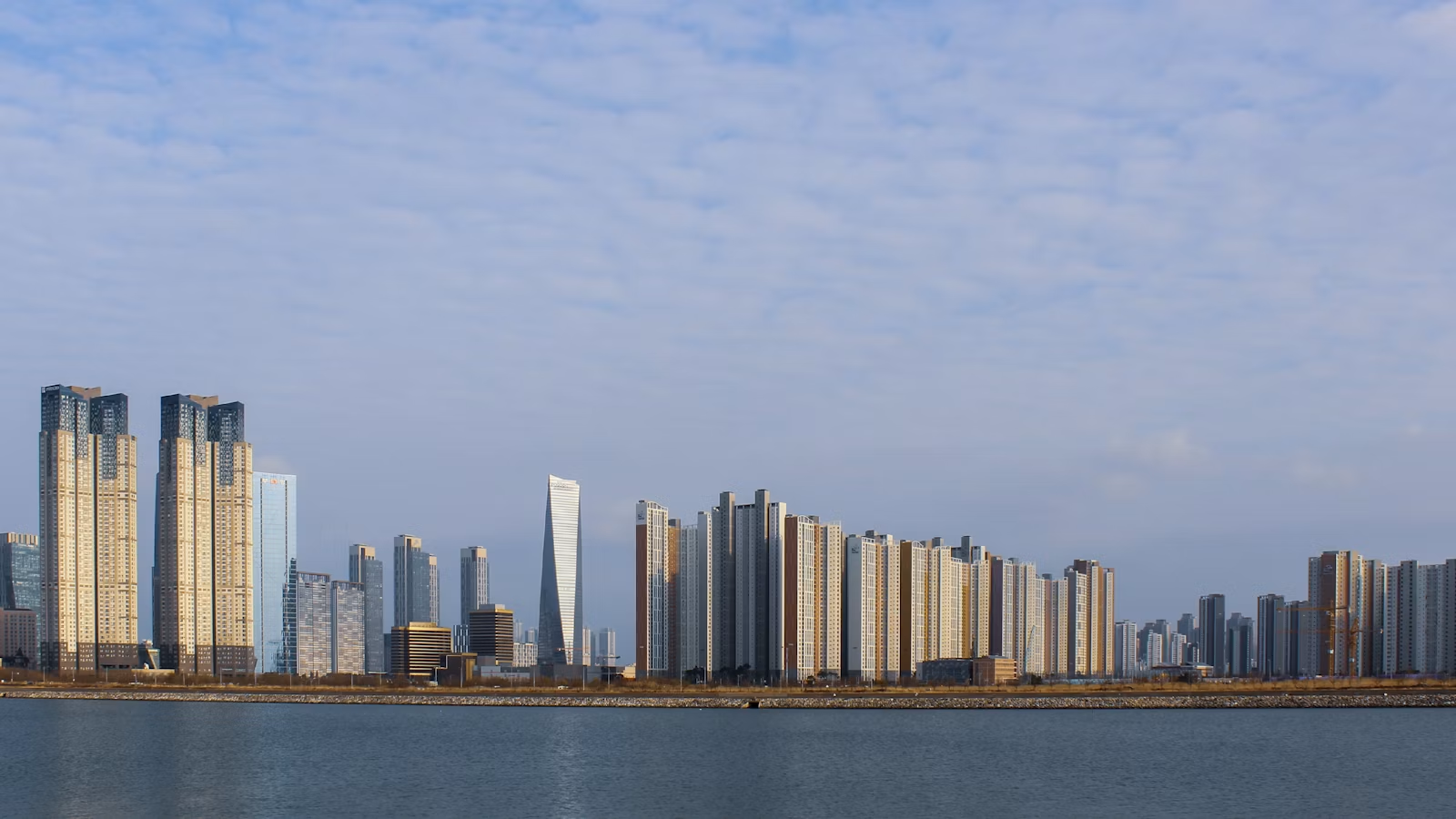
Songdo is a purpose-built smart city constructed on reclaimed land south of central Incheon, and it represents a completely different side of the city from the historical open port area. Its central park — Central Park — is modeled after New York’s version, complete with a canal, walking and cycling paths, and modern glass towers reflected in the water. The architecture and the cleanliness of the streets make it feel different from anywhere else in Korea.
For any Incheon travel guide, Songdo is worth visiting as a contrast to Seoul’s dense, older neighborhoods. The park is pleasant for walking, the restaurants along the canal offer varied international options, and the surrounding towers are impressive in their ambition.
4. Incheon Islands: Ganghwado and Muuido
The islands accessible by ferry or bridge from Incheon are one of the least-mentioned highlights in any typical Incheon travel guide, despite being genuinely rewarding. Ganghwado, Korea’s fifth-largest island, is rich in history — it served as a refuge for the Goryeo dynasty court during the Mongol invasions and later as the site of several pivotal military encounters with Western powers in the 19th century. Dolmens (ancient stone burial structures) that are UNESCO World Heritage Sites dot the island’s landscape.
Muuido is smaller and closer to the airport, known for its tidal flats and the beach at Hanagae, which becomes very shallow at low tide and is popular for shellfish gathering.
5. What to Eat in Incheon
No Incheon travel guide is complete without covering the seafood. Sinpo International Market near Chinatown is the most accessible place to find dakgangjeong (fried chicken glazed with sweet and spicy sauce), which originated here before spreading across Korea. The market stalls sell it fried to order with rice cakes mixed in, which is a combination specific to Incheon.
Incheon’s seafood markets — particularly Yeongjong Island’s markets near the airport and Soraepogu (Sorae Fish Market) — offer incredibly fresh raw fish, grilled clams, and large portions of hoe (raw fish) at prices well below Seoul restaurant levels. Coming here for a seafood lunch is one of the most rewarding activities in any Incheon travel guide.
Jjajangmyeon (black bean sauce noodles) is the Chinatown staple and, according to most Korean food historians, was popularized in Korea from this exact neighborhood in Incheon.
6. Best Time to Visit
This Incheon travel guide is valid year-round since the city is easily reachable in any season. Spring and autumn bring the most comfortable temperatures for walking the open port district and Chinatown. Summer is warm and the islands get more beach visitors. Winter is cold but the airport area, Chinatown restaurants, and Songdo’s indoor facilities remain fully operational.
The Incheon Pentaport Rock Festival runs in summer and draws large crowds; the Incheon Open Port Festival in October celebrates the city’s history.
Frequently Asked Questions
Can I visit Incheon as a day trip from Seoul? Yes, comfortably. The metro ride from central Seoul takes 40 to 60 minutes, and Chinatown, the open port district, and Songdo are all manageable in a single day without rushing.
Is the Incheon Airport transit area interesting on a layover? Terminal 1 has a Korean culture zone, traditional craft shops, sleeping capsules, and even a transit tour program for travelers with longer layovers — something every Incheon travel guide should acknowledge since so many readers arrive here first.
How do I get from Incheon Airport to the city center? The AREX express train runs from the airport to Seoul Station in 43 minutes and to Incheon’s Bupyeong district in about 30 minutes. Buses and taxis also connect the airport to Incheon city center in 30 to 50 minutes.
Is Ganghwado easy to visit from Incheon? Yes, by bus from Incheon Bus Terminal in about 1 hour. A car or taxi makes exploring the island’s dispersed sites significantly easier.
Final Thoughts
This Incheon travel guide makes the case for treating Incheon as a destination rather than a transit point. The Chinatown, the historical open port streets, the seafood markets, and the easy island access make it one of the most underestimated cities in the country.
A single night here changes the impression entirely.